
DAM-B Steam Attemperator
.png)
Attemperation is the primary technique used for controlling the degree of superheat in a boiler or a Heat Recovery Steam Generator (HRSG). This is achieved through a controlled injection of water into the superheated steam. Attemperators are typically installed between superheater stages to regulate the output temperature of the boiler/HRSG, as well as protect any secondary superheater pipes from damage due to excessive heat.
The temperature controller for this attemperator, called inter-stage, regulates temperature based on input from a temperature transmitter placed on the boiler/HRSG output. A secondary attemperator, called final stage, is often installed after the inter-stage temperature transmitter in order to prevent thermal damage to the steam turbine during start-up. The final stage attemperator ensures that the steam temperature upstream of the turbine does not rise too fast.
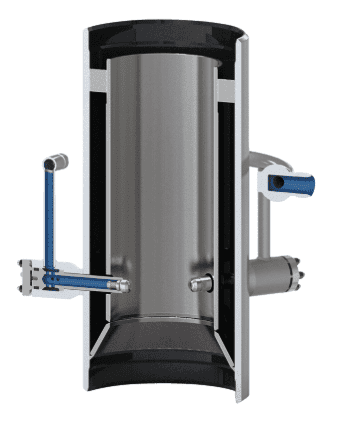
The DAM-B is a high-performing ring-style attemperator with a welded flow-profiling liner for superior evaporation and performance. It complies with all existing standards and is pressure tested on both the steam side as well as the water side.
The DAM-B attemperator is installed in the steam pipe with a number of water atomising nozzles attached. The size of the nozzles, their number, and insertion length vary depending on steam desuperheating needs and steam pipe diameter.